Truth & Reconciliation Has Barely Begun.
Why Truth, Economic Opportunity and Accountability All Matter and Yet the Work Has Barely Begun:
Understanding the Lasting Impact of Systemic Inequality
By Liz Senneker, Pabineau First Nation
I was recently viewing a tiktok video discussing how a game of monopoly can help us to understand the impacts of systemic racism and in our case it is a great analogy for explaining in Canada how the work of Truth & Reconciliation has truly, just barely even begun:
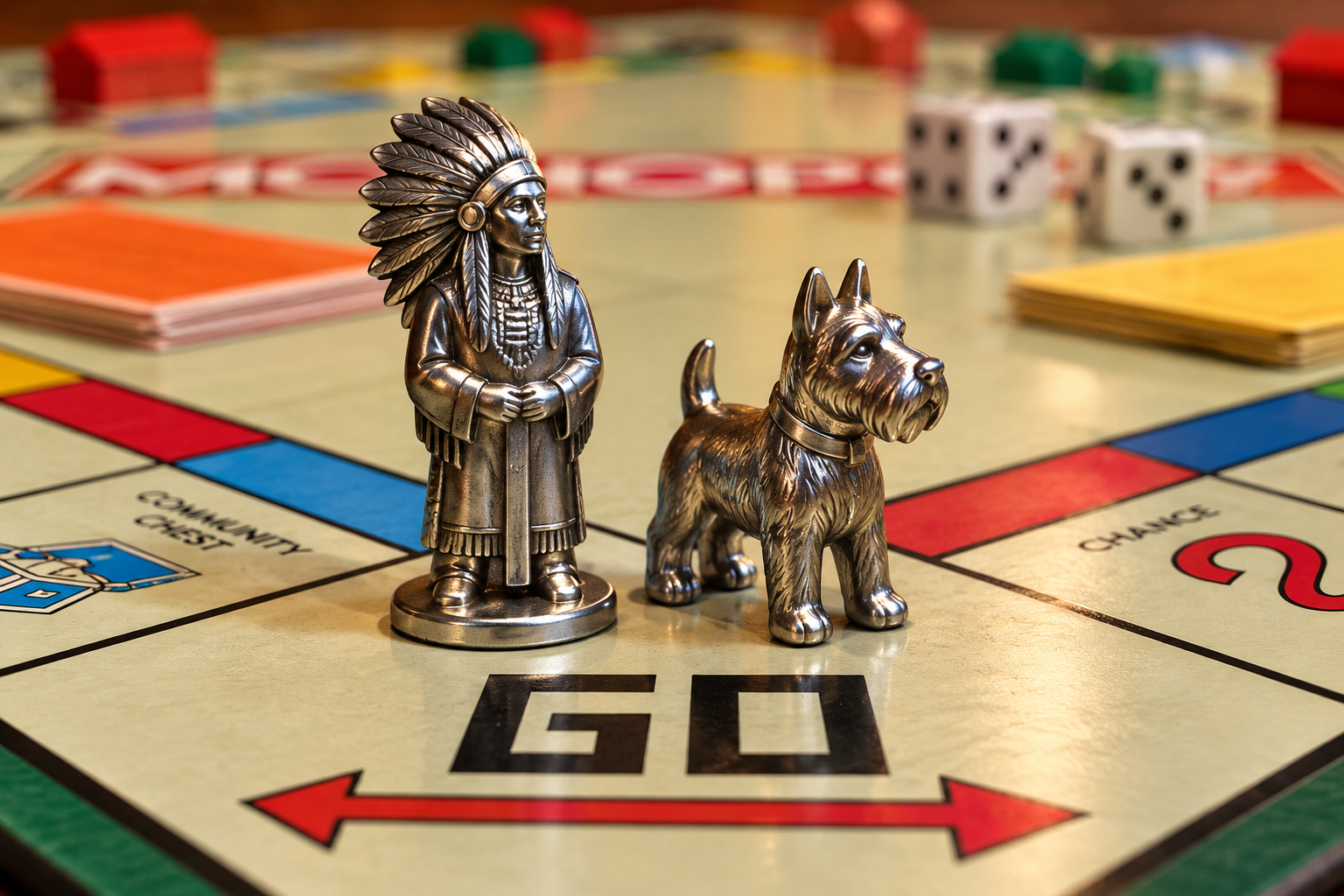
Imagine we sit down together to play Monopoly. Except there is one difference. For the first half of the game, only I am allowed to buy property. Every time I pass Go, I collect $200. You don’t. I can buy properties, build houses and eventually build hotels. You cannot. When you land on one of my properties, you still have to pay me. You can go to jail. You can lose money. You can fall further behind. But you aren't given the same opportunities to build wealth. Then, halfway through the game, someone finally looks at the rules and says: “Wait. This isn't fair.” So we change them. From this point forward, you are allowed to buy property too. You can collect $200 when you pass Go. We both have to follow the same rules.
Everything is equal now. Right? Wrong. I already own most of the board. I have houses. I have hotels. I have money in the bank. Every time you move around the board, there is a good chance you are still paying me. You can now earn an income, but if you want to buy land, build houses or open a business, much of that money still flows through an economy I had generations to establish before you were ever allowed to participate equally. Even returning to the lands you historically used and stewarded now means participating in a system of ownership that was imposed after the game had already begun.
Changing the rules was important. But changing the rules didn't restart the game.
And that is one way of beginning to understand why Truth and Reconciliation cannot simply be about saying that Indigenous and non-Indigenous people have equal rights today. It is about equal opportunities and working together to shrink the prosperity gap.
The Game Didn't Start Today
For generations, Indigenous Peoples across what is now Canada were subjected to laws, policies and systems that affected where they could live, how they could participate in the economy, how they could respond to the systems imposed upon them, whether their children could remain with their families or were forcibly removed through policies such as the residential school system and Sixties Scoop, and whether their cultures and languages could be practised and passed down.
Here in Mi'kma'ki, there is another incredibly important piece of the story.
The Peace and Friendship Treaties signed between the Crown and Mi'kmaq, Wolastoqey and Peskotomuhkati peoples were not land-surrender treaties.
The Government of Canada itself states that, unlike many later treaties elsewhere in Canada, the Peace and Friendship Treaties did not involve First Nations surrendering their rights to the lands and resources they traditionally used and occupied.
And yet, look around Mi'kma'ki today.
Cities have been built.
Forests have been harvested.
Farms have been established.
Fish and seafood have been harvested and exported.
Homes, businesses, ports, roads and industries now occupy land that has supported Mi'kmaq people since long before Canada ever existed.
Enormous wealth has been created on these lands, yet many First Nations people and communities are still working to close the prosperity gap — and some communities in Canada continue to face challenges accessing something as fundamental as safe drinking water.
That history matters when we talk about reconciliation today.
What Would the Land Be Worth?
This is where the Monopoly analogy becomes even more powerful.
Remember you are imagining halfway through the game you are NOW allowed to participate with the same rules, but you know the properties you were prevented from acquiring have become extraordinarily valuable.
Trying to calculate the total wealth generated from Mi'kma'ki over centuries would be nearly impossible. We're talking about land appreciation, residential and commercial real estate, forestry, fisheries, agriculture, ports, tourism, natural resources, businesses and generations of economic activity.
There is no responsible way to put one precise dollar figure on all of that.
But we can look at pieces of the modern economy to understand the scale.
Agriculture alone gives us an example. Statistics Canada's revised figures show that in 2024, farm cash receipts were approximately $1.18 billion in New Brunswick, $769 million in Nova Scotia and $840 million in Prince Edward Island — roughly $2.79 billion in those three provinces in a single year.*
And agriculture is only one industry.
Add forestry.
Add fisheries.
Add the value of urban land.
Add residential real estate.
Add commercial real estate.
Add ports, tourism and other industries.
Then don't calculate it for one year.
Calculate it across generations.
The amount of wealth generated from the lands and resources of Mi'kma'ki is not realistically quantifiable in a simple blog post. The point is not to manufacture an enormous number for shock value. It is to understand the extraordinary scale of the economic history behind the prosperity gap we are still working to close.
This isn't ancient history disconnected from today's economy. The land is still generating wealth. The wounds are still healing. Racism still exists, and misunderstandings about the purpose and value of reconciliation remain. Without dedicated efforts toward reconciliation, the prosperity gap will not simply disappear on its own.
Stewardship Is Not the Same as Surrender
Another important distinction that can get lost when discussing Indigenous and European relationships with the land is that these relationships have historically been understood through very different lenses.
Our traditional cultural understandings of land have emphasized relationships, responsibilities and stewardship rather than treating land simply as a commodity to be individually owned, extracted from and sold. It was not my land; it was our land. Our relationship with the land carried responsibilities to the community, to the beings living upon it, and to the generations that would come after us. We understood that we came from the land, that we cared for the land, and that the land cared for us. Its use was meant to benefit the community rather than a single individual owner.
That difference matters.
Because our people were not viewing land through a European system of private ownership does not mean the land belonged to nobody.
Stewardship was not surrender.
When one culture builds an economic system around ownership and capitalism and imposes that system on a culture of stewardship of the land, we cannot later point to that difference as justification for excluding Indigenous Peoples from the wealth the land generates.
That is particularly important in Mi'kma'ki because the Peace and Friendship Treaties did not surrender rights to traditionally used and occupied lands and resources.
Why Doesn't "Equal Opportunity Today" Fix It?
Go back to our Monopoly game.
Imagine I now tell you:
"I don't understand why you're still talking about the beginning of the game. The rules are equal now."
But I still have my properties. I still have my houses. I still have my hotels. I still have the money those properties generated. And I may have passed some of those properties and that wealth down to my children.
Meanwhile, you are trying to build your first house.
That is the difference between equality and repairing the effects of an unequal system.
Reconciliation isn't about blaming an individual person today for something that happened before they were born. It isn't about demanding that families abandon their homes or that developed cities simply be handed back. And it isn't about remaining trapped in the injustices of the past. It is about understanding how the past shaped the present — and then doing the work together to repair the inequities those systems left behind. Systems can create advantages and disadvantages that outlive the people who created them.
Reconciliation Is More Than Acknowledging the Past
Orange shirts matter.
Learning about residential schools matters.
Land acknowledgements matter.
Teaching Indigenous history matters.
Listening to Survivors matters.
But reconciliation cannot stop at acknowledgement.
It must also involve conversations about what our ongoing relationship looks like now.
Who participates when development occurs on traditional territories?
Who benefits economically from those developments?
Who has equity?
Who receives contracts?
Who has employment opportunities?
Who participates in decisions about land and resources?
How are Aboriginal and Treaty rights respected?
How do governments, industries, municipalities and First Nations build relationships in which Indigenous communities are participants and partners rather than observers?
Those are reconciliation questions too.
Reconciliation Also Requires Accountability
Reconciliation cannot exist without accountability. Survivors have testified about physical and sexual abuse, neglect and other harms suffered in institutions intended to assimilate Indigenous children.
The passage of time should not make those children less deserving of justice. Credible allegations of criminal wrongdoing should be investigated, and where evidence supports prosecution, those responsible should be held accountable — just as Canada continues to pursue accountability for other historical crimes decades after they occurred.
Accountability still requires evidence and due process, but reconciliation cannot mean simply acknowledging these harms and moving on.
Truth without accountability is incomplete.
There Is No Finish Line
Reconciliation does not mean handing someone a cheque and declaring history resolved.
It means creating meaningful conversations and opportunities for First Nations to participate in the economies operating within their traditional territories today. That can take many forms: equity ownership, partnerships, procurement and contracting opportunities, employment, revenue sharing, education and training, access to capital, and meaningful participation in major projects and resource development.
And importantly, reconciliation isn't only about what Indigenous communities receive.
It is about relationships. It is about carrying our responsibility as stewards of the land forward with us as we build the future. It is about Indigenous communities having meaningful opportunities to participate in decisions affecting their territories, economies and futures.
Sometimes reconciliation is discussed as though Canada will eventually complete enough initiatives that we can check a box marked DONE. But reconciliation isn't a project. It is a partnership, a relationship that requires continued work.
There will always be another generation that needs to learn history. There will always be new economic projects, new governments, new policies and new decisions about lands and resources.
The goal should not be to reach a day when Canada can say: "We finished reconciliation."
The goal should be to build a country where respectful relationships between Indigenous and non-Indigenous peoples are embedded in how we make decisions, share opportunities and move forward together.
Because when we look honestly at the length of our shared history, the generations affected by colonial policies, the wealth that has accumulated from the lands and resources of Mi'kma'ki, and the work still happening today to implement Aboriginal and Treaty rights, it becomes difficult to argue that reconciliation is nearing completion.
In many ways, we have barely begun.
And that doesn't need to be a discouraging message.
It can be an invitation. An invitation to learn, to listen, to ask for justice, to build relationships. And an invitation to make sure that, as we build the next generation of communities, businesses and economies across Mi'kma'ki, we build them together.
Sources: * https://www150.statcan.gc.ca/n1/daily-quotidien/260527/t002b-eng.htm